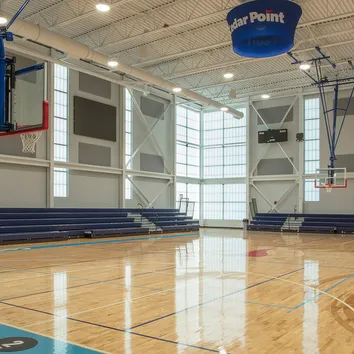
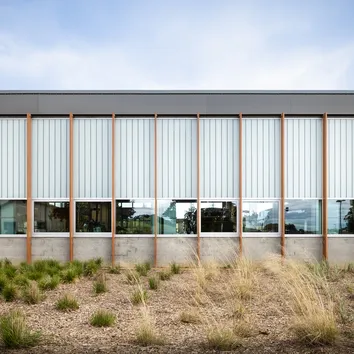
UniGrid™
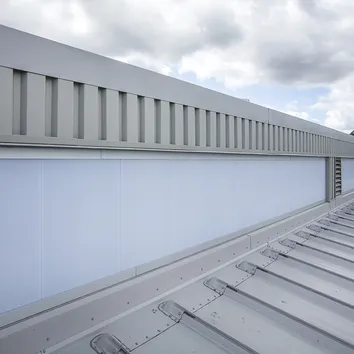
UniGrid™ translucent panel wall systems feature a lightweight sandwich panel design with fiberglass reinforced polymer (FRP) face sheets that provide light control and privacy.

Knowledge Article
Making the case for daylighting as a wise long-term investment.
Today, with increasing knowledge of the impact of biophilic design and a greater understanding of the scientific impact of lighting on occupants, architects have the opportunity to design for both health and productivity.
Before the advent of electric lighting, businesses and industrial facilities relied almost entirely on natural daylight for interior illumination. Factory designs in the late 19th and early 20th centuries, influenced by the ‘daylight factory’ movement, featured large windows and sawtooth roof designs with clerestory windows to make the most of daylight.
Today, with increasing knowledge of the impact of biophilic design and a greater understanding of the scientific impact of lighting on occupants, architects have the opportunity to design for both health and productivity. By incorporating natural daylight into their buildings, businesses can expect to profit on several fronts:
(1) Heschong Mahone Group (2003) Windows and Offices: a Study of Worker Performance and the Indoor Environment (Technical Report) for California Energy Commission, 2003, pp 2–4.
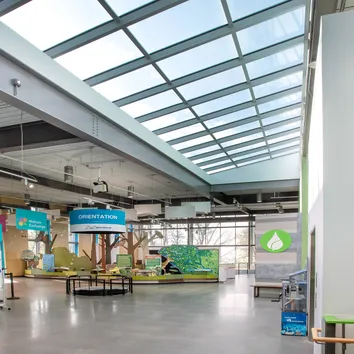
Daylighting in Office Spaces
Employees spend long hours indoors, often under electric lighting, which can cause negative effects such as eye strain, headaches, and decreased productivity.
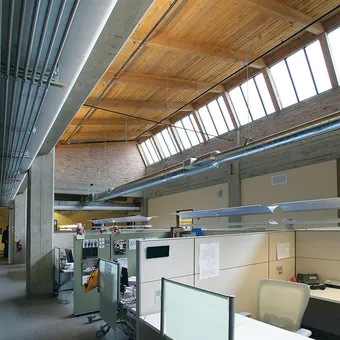
Daylighting supports a variety of elements in an office environment:
Below are some daylighting strategies specific to office environments:
Daylighting in Industrial Spaces
These types of facilities traditionally rely heavily on electric lighting, which contributes to high energy costs and operational expenses.
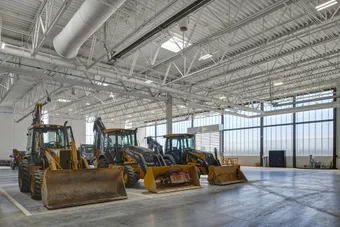
Incorporating daylighting can significantly improve efficiency and working conditions by providing through:
Strategies for Warehouses
Warehouses and storage facilities have their own unique needs.
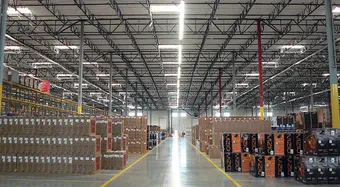
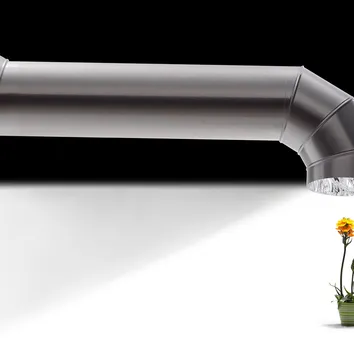
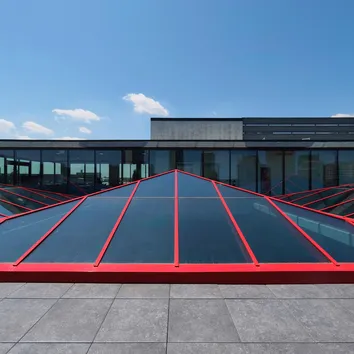
High-efficiency skylights and TDDs, when large and evenly spaced, can provide uniform daylight across warehouse floors without creating excessive glare.
Whatever the workplace, the multitude of advantages brought by thoughtful daylighting strategies contribute to creating healthy buildings. Designers who successfully incorporate daylighting strategies help their clients to significantly cut operational costs and enjoy a safer, greener, more efficient and, ultimately, more valuable work environment that boosts employee well-being and satisfaction.
Need design assistance or have questions? Get in touch with us by clicking on the button below.